

Shingles, also known as herpes zoster, is a viral infection that causes a painful rash. The varicella-zoster virus causes it, and that same virus also causes chickenpox. After someone has chickenpox, the virus can stay dormant in the body. It may reactivate years later and cause shingles.
Is Shingles Contagious?
Shingles itself is not contagious, but the virus that causes shingles, which is the varicella-zoster virus, can be spread to someone who has never had chickenpox or been vaccinated against it.
If that person contracts the virus, they will develop chickenpox, not shingles. Shingles can occur after chickenpox, as the virus stays dormant in the body and can reactivate later.
It is important to avoid contact with at-risk people until the shingles rash fully heals.
This includes pregnant women who have never had chickenpox and people with weak immune systems.
What Are The Symptoms of Shingles?
Shingles, also known as herpes zoster, can present with a variety of symptoms. The rash usually follows a dermatome pattern.
This means it appears on one side of the body. It stays within a specific region. Common symptoms include:
- Pain and Tingling: This is often the first sign. It can happen in one area where the rash will appear later.
- Rash: This typically develops a few days after the pain begins. It usually starts as red patches that can quickly evolve into fluid-filled blisters.
- Itching: The area around the rash may feel itchy.
- Flu-like Symptoms: Some people may experience fever, headache, fatigue, or sensitivity to light before the rash appears.
- Sensitivity or Discomfort: The affected area may be sensitive to touch, which can be quite uncomfortable.
What Does Shingles Look Like?
- Shingles typically presents as a painful rash that usually appears on one side of the body.
- It often starts with localized pain, itching, or tingling in the area where the rash will develop.
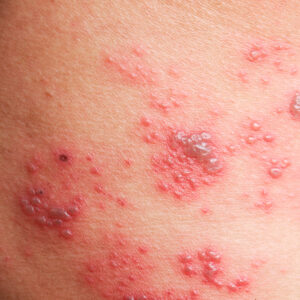
- After a few days, small red spots begin to form, which then develop into fluid-filled blisters. These blisters can be quite painful and may crust over and scab within a week or two.
- The rash often follows the path of a nerve and can be limited to one area, commonly on the torso, but it can also appear on the face, neck, or other parts of the body.
- The overall appearance can range from red, puffy skin to blister-like eruptions that eventually heal, leaving some discoloration.
Sample Image of What Shingles Looks Like:
How Long Does Shingles Last?
- Shingles typically lasts about 3 to 5 weeks.
- The initial phase involves a painful rash, which usually appears as blisters on one side of the body or face.
- The rash typically begins to scab over within a week, and most people start feeling better within two to four weeks.
The duration varies based on individual health and whether someone receives treatment. For some, especially older adults or those with weakened immune systems, symptoms may last longer and lead to complications.
Can You Get Shingles More Than Once?
- Yes, it is possible to get shingles more than once.
- While most people experience shingles only once in their lifetime, some individuals may have recurrent episodes.
- Factors such as age, immune system health, and stress can increase the risk of recurrence.
If you have had shingles before and worry about getting it again, talk to a healthcare professional. They can advise you on prevention and vaccination options.
What Is The Treatment For Shingles?
The treatment for shingles primarily focuses on relieving pain and speeding up the healing process. Here are some common approaches:
- Antiviral Medications
- Pain Relief
- Topical Treatments
- Corticosteroids
- Cool Compresses
- Rest and Hydration
- Vaccination
If you think you have shingles, see a healthcare provider soon. Early treatment can lead to better results.